Stochastic claims projections demo

JuliaActuary is an ecosystem of packages that makes Julia the easiest language to get started for actuarial workflows.
modeling
benchmark
tutorial
using CSV, DataFrames
using MortalityTables, ActuaryUtilities
using Dates
using OhMyThreads
using BenchmarkTools
using CairoMakie
using Random

include(joinpath(@__DIR__, "..", "..", "assets", "themes", "cassette_futurism.jl"))
set_theme!(cassette_futurism_theme())
Precompiling packages...
   4399.6 msQuartoNotebookWorkerMakieExt (serial)
  1 dependency successfully precompiled in 4 seconds
Precompiling packages...
   3640.1 msQuartoNotebookWorkerCairoMakieExt (serial)
  1 dependency successfully precompiled in 4 seconds

Define a datatype. Not strictly necessary, but will make extending the program with more functions easier.

Type annotations are optional, but providing them is able to coerce the values to be all plain bits (i.e. simple, non-referenced values like arrays are) when the type is constructed. This makes the whole data be stored in the stack and is an example of data-oriented design. It’s much slower without the type annotations (~0.5 million policies per second, ~50x slower).

@enum Sex Female = 1 Male = 2
@enum Risk Standard = 1 Preferred = 2

struct Policy
    id::Int
    sex::Sex
    benefit_base::Float64
    COLA::Float64
    mode::Int
    issue_date::Date
    issue_age::Int
    risk::Risk
end

Load the data:

sample_csv_data =
    IOBuffer(
        raw"id,sex,benefit_base,COLA,mode,issue_date,issue_age,risk
         1,M,100000.0,0.03,12,1999-12-05,30,Std
         2,F,200000.0,0.03,12,1999-12-05,30,Pref"
    )

policies = let

    # read CSV directly into a dataframe
    # df = CSV.read("sample_inforce.csv",DataFrame) # use local string for notebook
    df = CSV.read(sample_csv_data, DataFrame)

    # map over each row and construct an array of Policy objects
    map(eachrow(df)) do row
        Policy(
            row.id,
            row.sex == "M" ? Male : Female,
            row.benefit_base,
            row.COLA,
            row.mode,
            row.issue_date,
            row.issue_age,
            row.risk == "Std" ? Standard : Preferred,
        )
    end


end
2-element Vector{Policy}:
 Policy(1, Male, 100000.0, 0.03, 12, Date("1999-12-05"), 30, Standard)
 Policy(2, Female, 200000.0, 0.03, 12, Date("1999-12-05"), 30, Preferred)

Define what mortality gets used:

mort = Dict(
    Male => MortalityTables.table(988).ultimate,
    Female => MortalityTables.table(992).ultimate,
)

function mortality(pol::Policy, params)
    return params.mortality[pol.sex]
end
mortality (generic function with 1 method)

This defines the core logic of the policy projection and will write the results to the given out container (here, a named tuple of arrays).

This is using a threaded approach where it could be operating on any of the computer’s available threads, thus acheiving thread-based parallelism (as opposed to multi-processor (multi-machine) or GPU-based computation which requires formulating the problem a bit differently (array/matrix based). For the scale of computation here, I think I’d apply this model of parallelism.

function pol_project!(benefits, lives, policy, params)
    # some starting values for the given policy
    dur = duration(policy.issue_date, params.val_date)
    start_age = policy.issue_age + dur - 1
    COLA_factor = 1 + policy.COLA
    cur_benefit = policy.benefit_base * COLA_factor^(dur - 1)

    # get the right mortality vector
    qs = mortality(policy, params)
    ω = lastindex(qs)

    # inbounds turns off bounds-checking, which makes hot loops faster — write
    # the loop without it first to ensure you don't have an out-of-bounds bug.
    @inbounds for t in 1:min(params.proj_length, ω - start_age)
        q = qs[start_age + t]            # current mortality
        rand() < q && return              # death — stop incrementing this life

        # otherwise: pay benefit, add a life, grow the benefit by COLA for next year
        benefits[t] += cur_benefit
        lives[t]    += 1
        cur_benefit *= COLA_factor
    end
end
pol_project! (generic function with 1 method)

Parameters for our projection:

params = (
    val_date=Date(2021, 12, 31),
    proj_length=100,
    mortality=mort,
)
(val_date = Date("2021-12-31"), proj_length = 100, mortality = Dict{Sex, OffsetArrays.OffsetVector{Float64, Vector{Float64}}}(Male => [0.022571, 0.022571, 0.022571, 0.022571, 0.022571, 0.022571, 0.022571, 0.022571, 0.022571, 0.022571  …  0.4, 0.4, 0.4, 0.4, 0.4, 0.4, 0.4, 0.4, 0.4, 0.4], Female => [0.00745, 0.00745, 0.00745, 0.00745, 0.00745, 0.00745, 0.00745, 0.00745, 0.00745, 0.00745  …  0.376246, 0.386015, 0.393507, 0.398308, 0.4, 0.4, 0.4, 0.4, 0.4, 1.0]))

Check the number of threads we’re using:

Threads.nthreads()
10
# Serial projection — one scenario's worth of work. Each call owns its
# own (proj_length,) buffers, so there is no thread coordination.
function project_serial(policies, params)
    benefits = zeros(params.proj_length)
    lives    = zeros(Int, params.proj_length)
    for pol in policies
        pol_project!(benefits, lives, pol, params)
    end
    (; benefits, lives)
end

# Threaded projection — used for the throughput demo. Policies are
# chunked, each task accumulates into its own local buffers, and the
# partial results are summed at the end. No `threadid()` and no shared
# writes, so it is correct under task migration.
function project(policies, params)
    chunks = OhMyThreads.chunks(policies; n = Threads.nthreads())
    parts  = OhMyThreads.tmap(chunks) do chunk
        b = zeros(params.proj_length)
        l = zeros(Int, params.proj_length)
        for pol in chunk
            pol_project!(b, l, pol, params)
        end
        (b, l)
    end
    benefits = sum(p -> p[1], parts)
    lives    = sum(p -> p[2], parts)
    (; benefits, lives)
end
project (generic function with 1 method)

Example of single projection:

project(repeat(policies, 100_000), params)
(benefits = [5.6290327893816505e10, 5.6687917435023285e10, 5.70735404506219e10, 5.739736251899788e10, 5.762196207749678e10, 5.783614609582748e10, 5.797013869123363e10, 5.8016993162106316e10, 5.807225462320919e10, 5.7999113923170906e10  …  0.0, 0.0, 0.0, 0.0, 0.0, 0.0, 0.0, 0.0, 0.0, 0.0], lives = [195263, 190367, 185492, 180503, 175336, 170272, 165114, 159875, 154872, 149665  …  0, 0, 0, 0, 0, 0, 0, 0, 0, 0])

Benchmarking

Using a Macbook Air M3 laptop, about 45 million policies able to be stochastically projected per second:

# Skipped at render time — allocating 45M policies + running @benchmark
# OOMs the Quarto worker. The number is preserved for documentation; the
# block runs interactively when you open the post locally.
policies_to_benchmark = 45_000_000
# adjust the `repeat` depending on how many policies are already in the array
# to match the target number for the benchmark
n = policies_to_benchmark ÷ length(policies)

@benchmark project(p, r) setup = (p = repeat($policies, $n); r = $params)

Stochastic Ensemble

Loop through and calculate the reults n times (this is only running the two policies in the sample data” n times).

# One level of parallelism — across scenarios — with the serial kernel
# inside. Avoids nested threadpool contention.
stochastic_proj(policies, params, n) =
    OhMyThreads.tmap(_ -> project_serial(policies, params), 1:n)

stoch = stochastic_proj(policies, params, 50)
50-element Vector{@NamedTuple{benefits::Vector{Float64}, lives::Vector{Int64}}}:
 (benefits = [574831.0226582347, 592075.9533379817, 609838.2319381211, 628133.3788962648, 215659.12675438426, 222128.9005570158, 228792.76757372628, 235656.55060093806, 242726.24711896622, 250008.0345325352  …  0.0, 0.0, 0.0, 0.0, 0.0, 0.0, 0.0, 0.0, 0.0, 0.0], lives = [2, 2, 2, 2, 1, 1, 1, 1, 1, 1  …  0, 0, 0, 0, 0, 0, 0, 0, 0, 0])
 (benefits = [574831.0226582347, 592075.9533379817, 609838.2319381211, 628133.3788962648, 646977.3802631528, 666386.7016710474, 686378.3027211789, 706969.6518028142, 728178.7413568987, 750024.1035976056  …  0.0, 0.0, 0.0, 0.0, 0.0, 0.0, 0.0, 0.0, 0.0, 0.0], lives = [2, 2, 2, 2, 2, 2, 2, 2, 2, 2  …  0, 0, 0, 0, 0, 0, 0, 0, 0, 0])
 (benefits = [574831.0226582347, 592075.9533379817, 609838.2319381211, 628133.3788962648, 646977.3802631528, 666386.7016710474, 686378.3027211789, 706969.6518028142, 728178.7413568987, 750024.1035976056  …  0.0, 0.0, 0.0, 0.0, 0.0, 0.0, 0.0, 0.0, 0.0, 0.0], lives = [2, 2, 2, 2, 2, 2, 2, 2, 2, 2  …  0, 0, 0, 0, 0, 0, 0, 0, 0, 0])
 (benefits = [574831.0226582347, 592075.9533379817, 609838.2319381211, 628133.3788962648, 646977.3802631528, 666386.7016710474, 686378.3027211789, 706969.6518028142, 728178.7413568987, 750024.1035976056  …  0.0, 0.0, 0.0, 0.0, 0.0, 0.0, 0.0, 0.0, 0.0, 0.0], lives = [2, 2, 2, 2, 2, 2, 2, 2, 2, 2  …  0, 0, 0, 0, 0, 0, 0, 0, 0, 0])
 (benefits = [574831.0226582347, 592075.9533379817, 609838.2319381211, 628133.3788962648, 646977.3802631528, 666386.7016710474, 686378.3027211789, 706969.6518028142, 728178.7413568987, 250008.0345325352  …  0.0, 0.0, 0.0, 0.0, 0.0, 0.0, 0.0, 0.0, 0.0, 0.0], lives = [2, 2, 2, 2, 2, 2, 2, 2, 2, 1  …  0, 0, 0, 0, 0, 0, 0, 0, 0, 0])
 (benefits = [574831.0226582347, 592075.9533379817, 609838.2319381211, 628133.3788962648, 646977.3802631528, 666386.7016710474, 686378.3027211789, 706969.6518028142, 728178.7413568987, 500016.0690650704  …  0.0, 0.0, 0.0, 0.0, 0.0, 0.0, 0.0, 0.0, 0.0, 0.0], lives = [2, 2, 2, 2, 2, 2, 2, 2, 2, 1  …  0, 0, 0, 0, 0, 0, 0, 0, 0, 0])
 (benefits = [574831.0226582347, 592075.9533379817, 609838.2319381211, 628133.3788962648, 646977.3802631528, 666386.7016710474, 686378.3027211789, 706969.6518028142, 728178.7413568987, 750024.1035976056  …  0.0, 0.0, 0.0, 0.0, 0.0, 0.0, 0.0, 0.0, 0.0, 0.0], lives = [2, 2, 2, 2, 2, 2, 2, 2, 2, 2  …  0, 0, 0, 0, 0, 0, 0, 0, 0, 0])
 (benefits = [574831.0226582347, 592075.9533379817, 609838.2319381211, 628133.3788962648, 646977.3802631528, 666386.7016710474, 457585.53514745255, 471313.1012018761, 485452.49423793243, 500016.0690650704  …  0.0, 0.0, 0.0, 0.0, 0.0, 0.0, 0.0, 0.0, 0.0, 0.0], lives = [2, 2, 2, 2, 2, 2, 1, 1, 1, 1  …  0, 0, 0, 0, 0, 0, 0, 0, 0, 0])
 (benefits = [574831.0226582347, 592075.9533379817, 609838.2319381211, 628133.3788962648, 646977.3802631528, 666386.7016710474, 686378.3027211789, 706969.6518028142, 728178.7413568987, 750024.1035976056  …  0.0, 0.0, 0.0, 0.0, 0.0, 0.0, 0.0, 0.0, 0.0, 0.0], lives = [2, 2, 2, 2, 2, 2, 2, 2, 2, 2  …  0, 0, 0, 0, 0, 0, 0, 0, 0, 0])
 (benefits = [574831.0226582347, 592075.9533379817, 406558.82129208074, 418755.5859308432, 431318.2535087685, 444257.8011140316, 457585.53514745255, 0.0, 0.0, 0.0  …  0.0, 0.0, 0.0, 0.0, 0.0, 0.0, 0.0, 0.0, 0.0, 0.0], lives = [2, 2, 1, 1, 1, 1, 1, 0, 0, 0  …  0, 0, 0, 0, 0, 0, 0, 0, 0, 0])
 ⋮
 (benefits = [574831.0226582347, 592075.9533379817, 609838.2319381211, 628133.3788962648, 646977.3802631528, 666386.7016710474, 686378.3027211789, 706969.6518028142, 728178.7413568987, 500016.0690650704  …  0.0, 0.0, 0.0, 0.0, 0.0, 0.0, 0.0, 0.0, 0.0, 0.0], lives = [2, 2, 2, 2, 2, 2, 2, 2, 2, 1  …  0, 0, 0, 0, 0, 0, 0, 0, 0, 0])
 (benefits = [574831.0226582347, 592075.9533379817, 609838.2319381211, 628133.3788962648, 646977.3802631528, 666386.7016710474, 686378.3027211789, 706969.6518028142, 728178.7413568987, 750024.1035976056  …  0.0, 0.0, 0.0, 0.0, 0.0, 0.0, 0.0, 0.0, 0.0, 0.0], lives = [2, 2, 2, 2, 2, 2, 2, 2, 2, 2  …  0, 0, 0, 0, 0, 0, 0, 0, 0, 0])
 (benefits = [574831.0226582347, 592075.9533379817, 609838.2319381211, 628133.3788962648, 646977.3802631528, 666386.7016710474, 686378.3027211789, 706969.6518028142, 728178.7413568987, 750024.1035976056  …  0.0, 0.0, 0.0, 0.0, 0.0, 0.0, 0.0, 0.0, 0.0, 0.0], lives = [2, 2, 2, 2, 2, 2, 2, 2, 2, 2  …  0, 0, 0, 0, 0, 0, 0, 0, 0, 0])
 (benefits = [574831.0226582347, 592075.9533379817, 609838.2319381211, 628133.3788962648, 646977.3802631528, 666386.7016710474, 686378.3027211789, 706969.6518028142, 728178.7413568987, 750024.1035976056  …  0.0, 0.0, 0.0, 0.0, 0.0, 0.0, 0.0, 0.0, 0.0, 0.0], lives = [2, 2, 2, 2, 2, 2, 2, 2, 2, 2  …  0, 0, 0, 0, 0, 0, 0, 0, 0, 0])
 (benefits = [383220.68177215644, 394717.3022253211, 406558.82129208074, 418755.5859308432, 431318.2535087685, 444257.8011140316, 457585.53514745255, 471313.1012018761, 485452.49423793243, 500016.0690650704  …  0.0, 0.0, 0.0, 0.0, 0.0, 0.0, 0.0, 0.0, 0.0, 0.0], lives = [1, 1, 1, 1, 1, 1, 1, 1, 1, 1  …  0, 0, 0, 0, 0, 0, 0, 0, 0, 0])
 (benefits = [574831.0226582347, 592075.9533379817, 609838.2319381211, 628133.3788962648, 646977.3802631528, 666386.7016710474, 686378.3027211789, 706969.6518028142, 728178.7413568987, 750024.1035976056  …  0.0, 0.0, 0.0, 0.0, 0.0, 0.0, 0.0, 0.0, 0.0, 0.0], lives = [2, 2, 2, 2, 2, 2, 2, 2, 2, 2  …  0, 0, 0, 0, 0, 0, 0, 0, 0, 0])
 (benefits = [574831.0226582347, 592075.9533379817, 609838.2319381211, 628133.3788962648, 431318.2535087685, 444257.8011140316, 457585.53514745255, 471313.1012018761, 485452.49423793243, 500016.0690650704  …  0.0, 0.0, 0.0, 0.0, 0.0, 0.0, 0.0, 0.0, 0.0, 0.0], lives = [2, 2, 2, 2, 1, 1, 1, 1, 1, 1  …  0, 0, 0, 0, 0, 0, 0, 0, 0, 0])
 (benefits = [574831.0226582347, 592075.9533379817, 609838.2319381211, 628133.3788962648, 646977.3802631528, 666386.7016710474, 686378.3027211789, 706969.6518028142, 728178.7413568987, 750024.1035976056  …  0.0, 0.0, 0.0, 0.0, 0.0, 0.0, 0.0, 0.0, 0.0, 0.0], lives = [2, 2, 2, 2, 2, 2, 2, 2, 2, 2  …  0, 0, 0, 0, 0, 0, 0, 0, 0, 0])
 (benefits = [574831.0226582347, 592075.9533379817, 609838.2319381211, 628133.3788962648, 646977.3802631528, 666386.7016710474, 686378.3027211789, 706969.6518028142, 728178.7413568987, 750024.1035976056  …  0.0, 0.0, 0.0, 0.0, 0.0, 0.0, 0.0, 0.0, 0.0, 0.0], lives = [2, 2, 2, 2, 2, 2, 2, 2, 2, 2  …  0, 0, 0, 0, 0, 0, 0, 0, 0, 0])
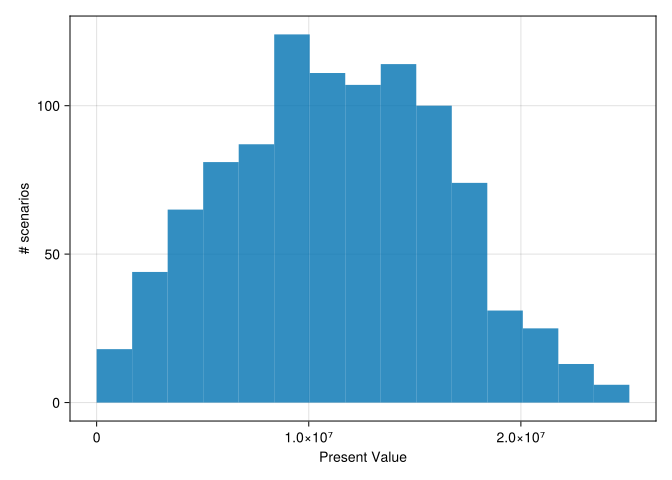
v = [pv(0.03, s.benefits) for s in stoch]
hist(v,
    bins=15;
    axis=(xlabel="Present Value", ylabel="# scenarios")
)

Further Optimization

In no particular order:

  • the RNG could be made faster: https://bkamins.github.io/julialang/2020/11/20/rand.html
  • Could make the stochastic set distributed, but at the current speed the overhead of distributed computing is probably more time than it would save. Same thing with GPU projections